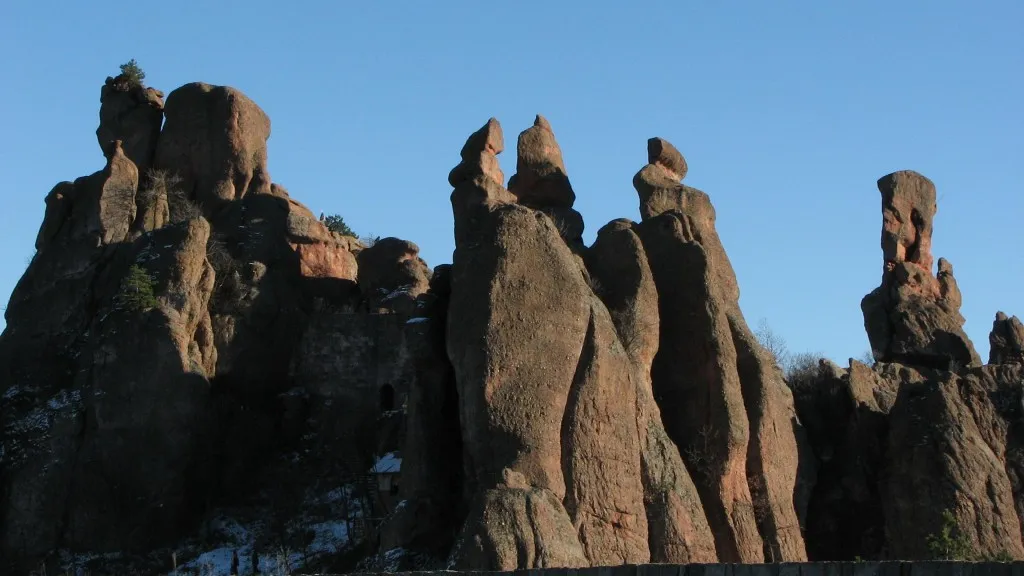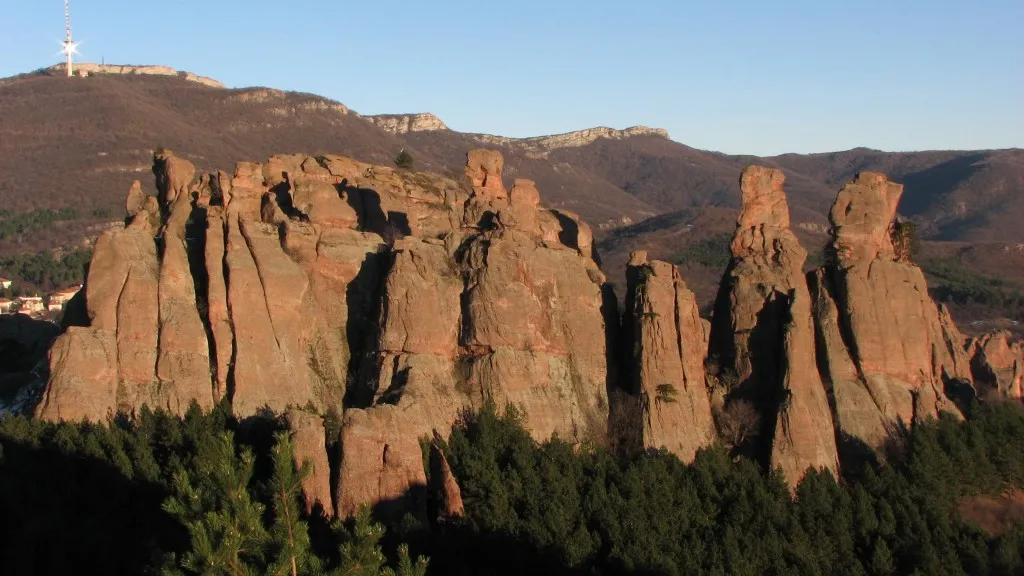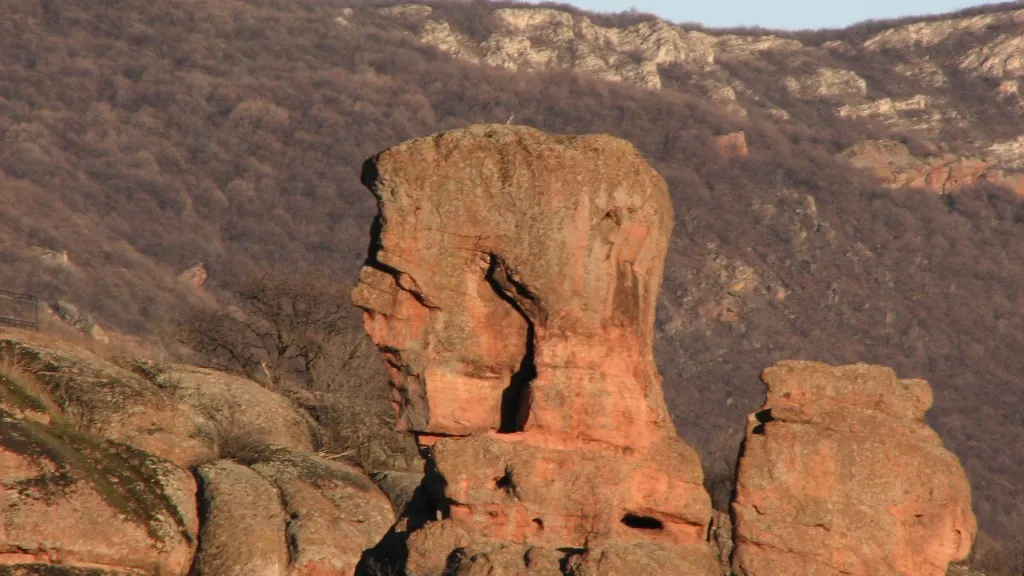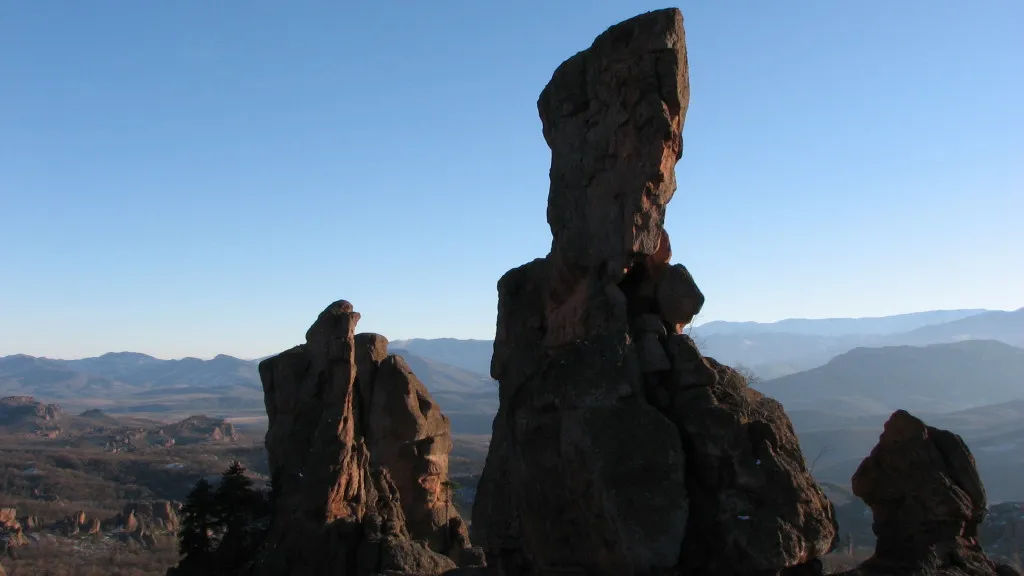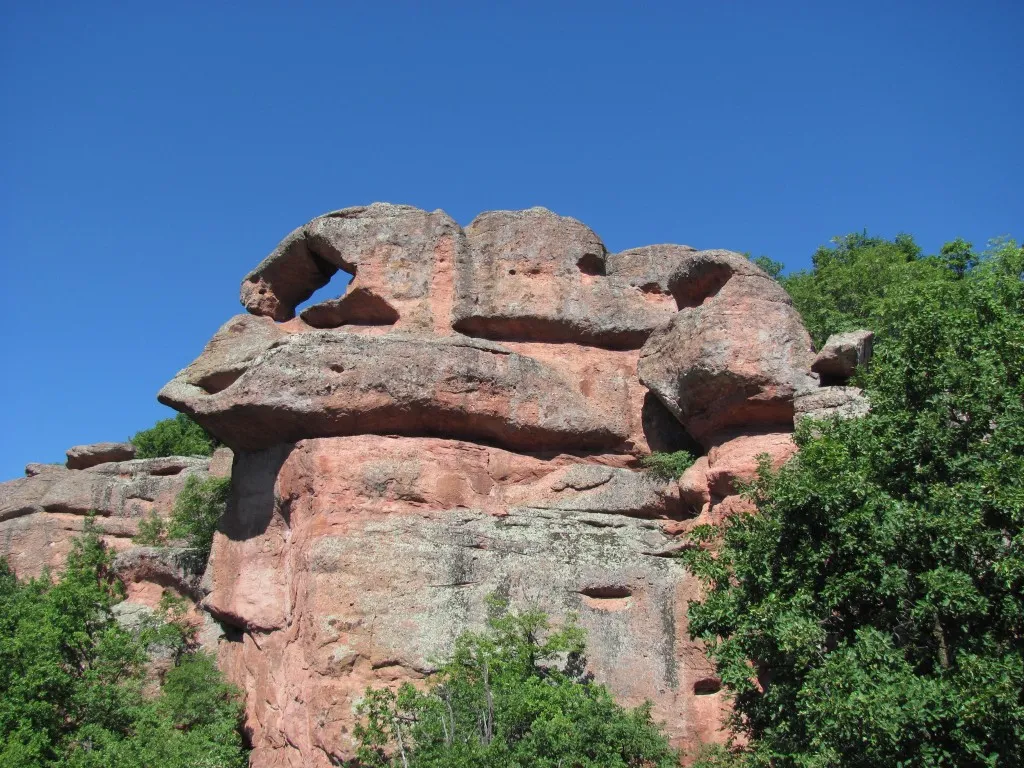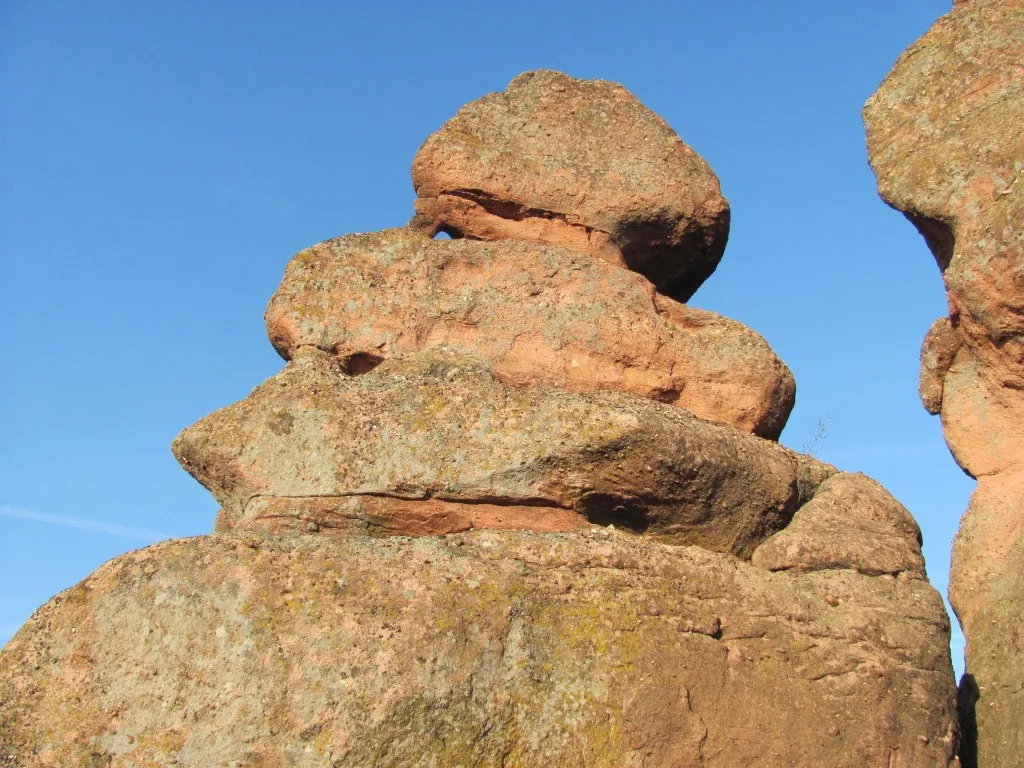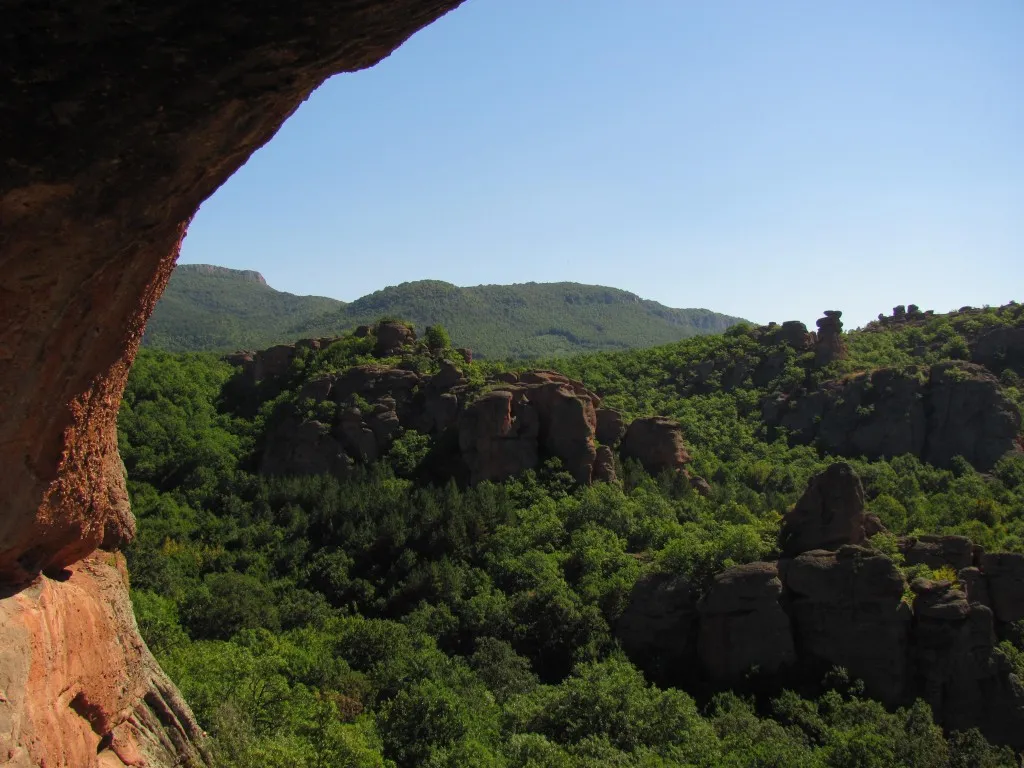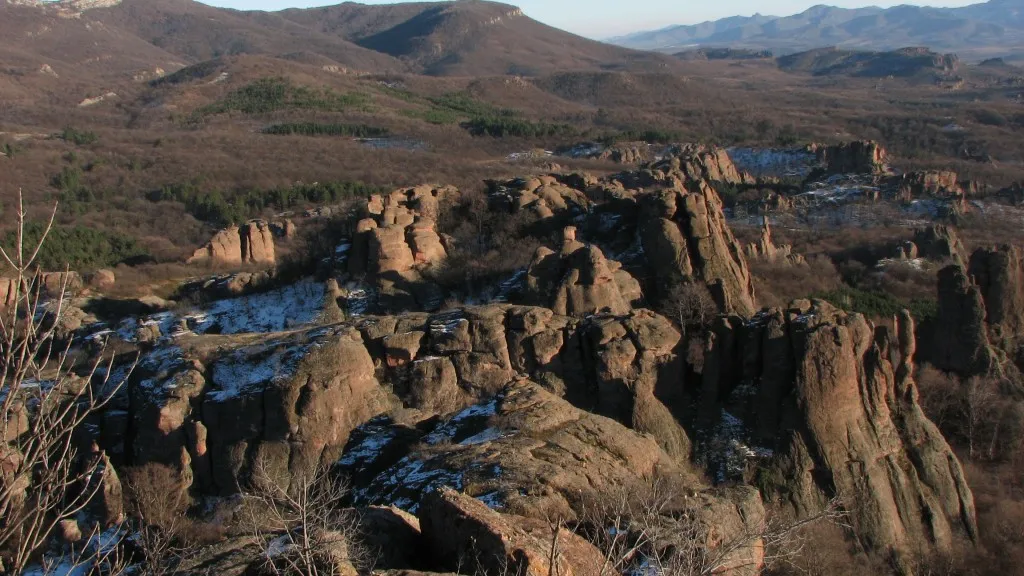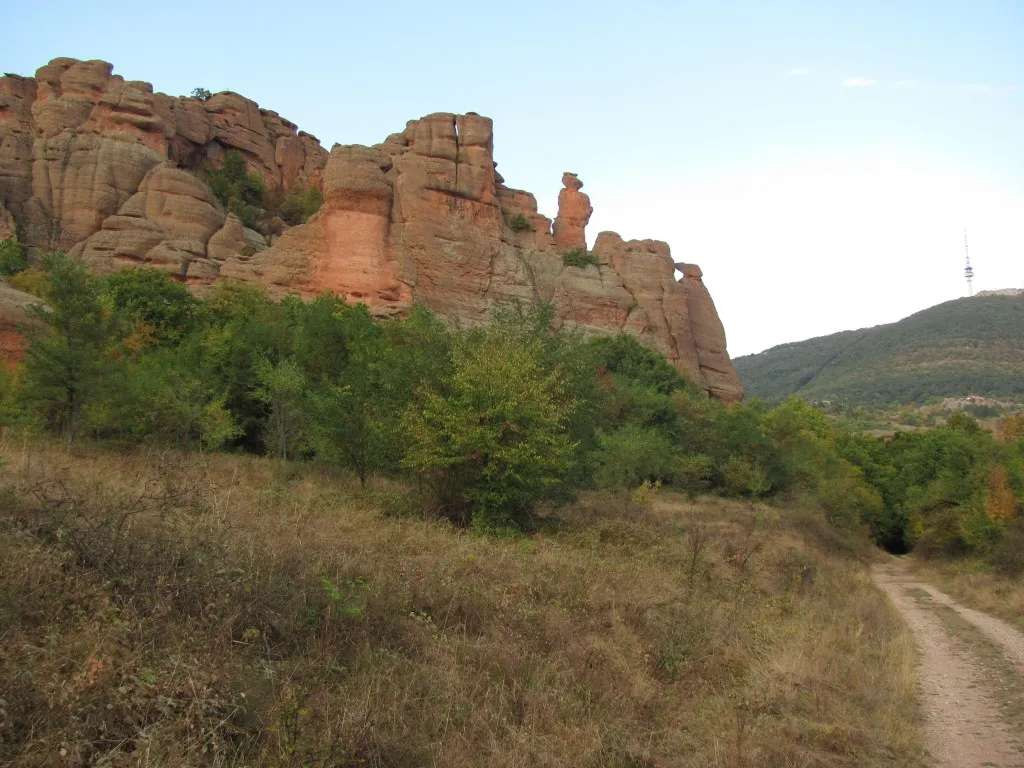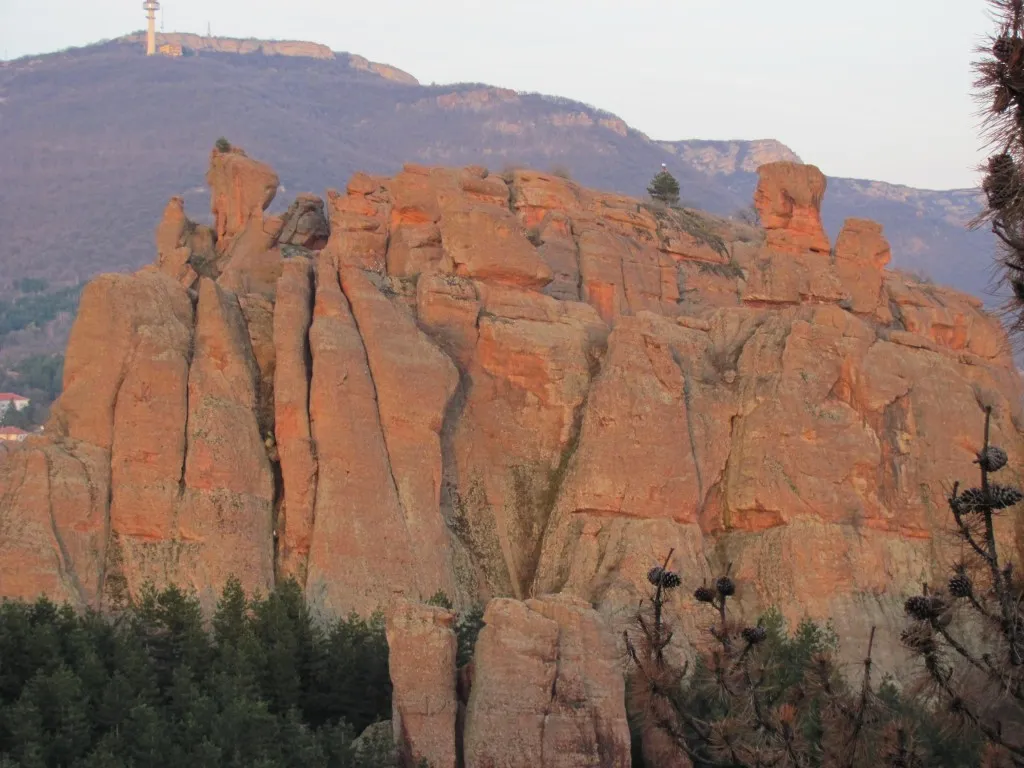
The Belogradchik Rocks cover an area 30 km long and 15 km wide. The chain begins at Vedernik peak (1124 m) with the rock groups near the villages of Granichak and Dabravka, where the mighty Borich stands, and ends near the village of Belotintsi with the group Sto Ovtse (“Hundred Sheep”).
Rain and wind have turned shapeless stone into sculptures that look like mythical creatures, human figures, animals and birds. The rocks are beautiful in every season: in winter they stand like giants in white caps, and in spring they seem to float in the green sea of trees and flowers.
The three groups
In the east is the Falkovets group: Momina Skala, Pchelen Kamak, Orlov Kamak and Borov Kamak. The central group stands by the town itself: Mislen Kamak, the Horseman, the Madonna, the Dervish, Metoha, the Schoolgirl, Adam and Eve, Velkova Glava, Kukuvitsata. In the west is the Zbegove group: the Twins, Skalnata Feeria, Magaza and Borich.
The grandest rocks ring Belogradchik: the Madonna, the Horseman, the Monks, the Schoolgirl, the Dervish, the Lion, the Bear, Adam and Eve, Haiduk Velko, the Castle. Four kilometres from the town, around the Lepenitsa cave, is another large group whose most striking figure is the Dinosaur.
From the terrace of Mislen Kamak you see an endless panorama of crags, rocks, chasms, meadows and small valleys with clear streams, and far away the outline of the Balkan Mountains. The names of the figures were given by the imagination of the people.
How they were formed
At the end of the Palaeozoic, about 230 million years ago, sandy marl rocks were laid down here. Later a sea covered them, and sand, gravel and clay settled on its bed. In time a sandy-clay cement bound them into conglomerates and sandstones. Their reddish colour comes from iron oxides and hydroxides.
In the Jurassic, lighter grey and cream-white limestones were laid over the sandstones; they form the crests of today's Belogradchik Venets and Vedernik. When the layers folded, the area fell in the centre of a large anticline. Water, wind and changes of temperature wore away the limestones and exposed the heavily cracked conglomerates. So, over millions of years, nature made these strange shapes.
Nature around the rocks
The flora includes many Balkan endemics listed in the Red Data Book of Bulgaria. Golden eagle, eagle owl, Egyptian vulture, black stork, wolf, wild boar, red deer, roe deer and dormouse live here. More than 100 caves with fine formations have formed in the area; the best known is Magura.
Several eco-trails start from Belogradchik and wind among the rocks; they suit cycling too.
A natural fortress
The rock columns, up to 200 m high, form a natural fortress whose protection has been used since ancient times. The Kaleto fortress is built among them.
The Belogradchik Rocks were declared a natural landmark in 1949 and were nominated for one of the New Seven Wonders of the World in 2008. Together with the fortress they are among the 100 National Tourist Sites of Bulgaria.
The legend of the Madonna
Centuries ago there was a convent and a monastery among the rocks. The youngest novice, Valentina, was so beautiful that word of her spread across the whole Roman Empire. On a St Peter's Day, when people were allowed to visit the monasteries, she met the Roman Antonio.
Their love stayed hidden for a long time, even when Antonio climbed a rope to her cell. But Valentina bore a child, and its crying gave her away. The monks decided to curse her and drive her out of the convent with the child.
At that moment Antonio appeared from the hill on his white horse. A storm broke over the rocks, lightning struck, the earth shook. The monastery fell and everything around turned to stone: the Horseman, the Monks, and Valentina, the Madonna with the child in her arms. The other figures have their stories too: the Bear, the Dervish, the Schoolgirl, Adam and Eve, the Eagle, the Mushrooms, Haiduk Velko, Momina Skala.